 Jump to recipe
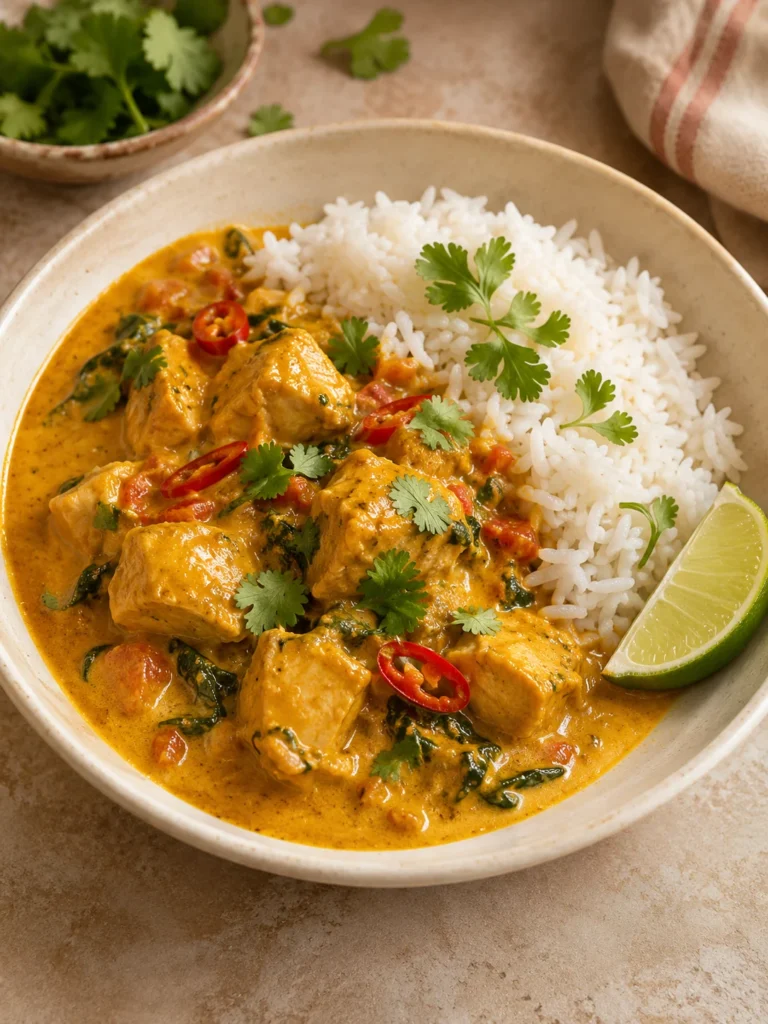
This is the curry to make when you want a comforting bowl of dinner without a long list of ingredients or a cupboard full of individual spices. Mild curry powder gives the sauce its warmth, coconut milk makes it round and creamy, and lime brings everything into focus at the end. It is a flexible, everyday curry rather than a recreation of one particular regional dish, so there is room to adapt it to what is already in your kitchen.
Build flavour in a few simple stages
Begin by giving the onion a few minutes to soften. It does not need to caramelise, but it should lose its sharp raw smell and become translucent. Garlic and ginger go in next because they need less time. Keep them moving so they do not catch on the bottom of the pan. The curry powder and tomato paste only need a brief stir before the liquid goes in; this takes away their raw edge and helps spread the flavour through the sauce.
Chicken thighs are useful here because they stay tender during a gentle simmer. Cut them into reasonably even pieces, removing any large pieces of visible fat. You do not need to brown every side separately for this recipe. Coating the chicken in the spice mixture, then letting it cook in the coconut sauce, keeps the method quick and the cleanup simple. If you use breast instead, check it a little earlier and avoid an aggressive boil.
Keep the simmer gentle
Once the coconut milk and stock are in the pan, bring the mixture just to a simmer, then lower the heat. You want small, steady bubbles rather than a rolling boil. Stir occasionally, particularly around the edges where the sauce reduces fastest. Full-fat coconut milk produces the richest result. Light coconut milk works, but the sauce will be thinner and may need a little longer to reduce before you add the spinach.
The chicken should reach 74°C in its thickest part. If the sauce is thick enough before the chicken is done, add a small splash of water and keep simmering gently. If the chicken is cooked but the sauce is thin, lift the pieces out temporarily and reduce the sauce for a few minutes. This gives you control without overcooking the meat. Stir the spinach in only at the end so it stays green and does not disappear into the sauce.
Balance the sauce before serving
Taste the finished curry before adding anything else. Coconut milk softens the spices, and the stock contributes salt, so the amount of seasoning you need will vary. A little sugar rounds off the tomato paste without making the dish sweet. Lime juice is the final adjustment: squeeze in half, stir, then taste again. If the curry seems heavy or flat, a little more lime is often more helpful than another spoonful of spice.
Serve the curry with jasmine rice, basmati rice, or a warm flatbread. Start rice before the curry if you want both ready at the same time. A cucumber salad makes a refreshing side, especially if you add chilli to the sauce. Fresh coriander is optional; if it is not something you enjoy, simply leave it off and finish with the lime wedges. Put extra chilli on the table for anyone who wants more heat.
Useful swaps and additions
Frozen peas can replace the spinach; add them for the final few minutes of cooking. Small broccoli florets work too, although they need longer to soften, so add them with the coconut milk. Keep the quantity modest so the pan does not become crowded. For a meat-free variation, use drained chickpeas and small cauliflower florets, swap the chicken stock for vegetable stock, and simmer until the cauliflower is tender.
Check the label on your curry powder if you are cooking for someone who avoids dairy or other allergens. Blends differ, and the same is true of stock. If the powder is particularly hot, begin with less and taste the sauce once the chicken has cooked. You can always add a small amount of extra spice dissolved into a little hot sauce, but it is much harder to take heat away once it is in the pan.
Store a little comfort for tomorrow
Cool leftovers promptly, refrigerate within two hours, and use within three days. Reheat gently in a saucepan until steaming hot all the way through, adding a splash of water if the sauce has thickened in the fridge. Store rice separately and follow safe cooling and reheating guidance for it. A curry portion without rice can be frozen in an airtight container for up to two months; thaw overnight in the fridge before reheating.
Questions from the kitchen
Can I make this ahead?
Yes. The sauce and chicken reheat well. Leave out the spinach until reheating if you want it to keep its colour, and add fresh lime just before serving. The flavours will settle together overnight, so taste and adjust the seasoning after reheating rather than assuming it needs the same amount as the first day.
My sauce has separated slightly. Is it ruined?
Not necessarily. Coconut milk can look a little grainy if boiled hard or after freezing. A gentle simmer and a good stir usually bring the sauce back together well enough for serving. Next time, reduce the heat as soon as the curry starts bubbling.