 Jump to recipe
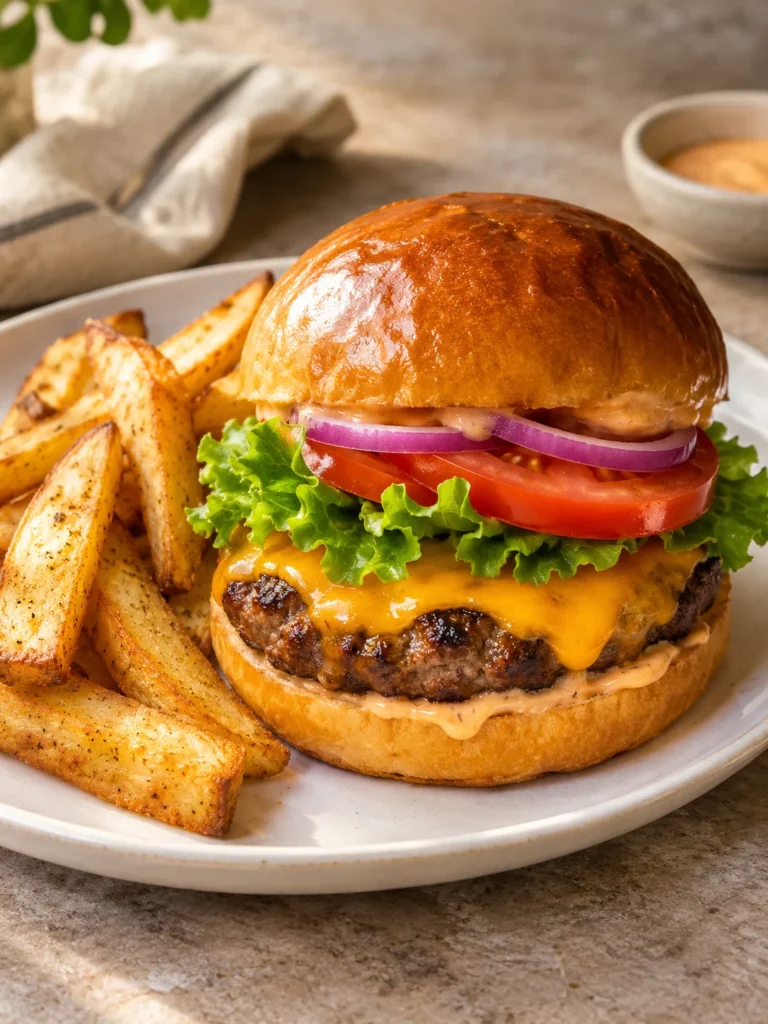
There is something deeply satisfying about a proper homemade burger: the warm bun, the little puddle of melted cheese, and the contrast between a hot patty and cold, crisp lettuce. This version keeps the beef mixture deliberately simple. There are no breadcrumbs, eggs, or finely chopped vegetables to prepare. The flavour comes from good browning and a few familiar toppings, so most of your effort goes into getting everything ready before the pan heats up.
The small details that make a better burger
Choose mince with a little fat rather than the leanest pack in the fridge. Around 15–20% fat gives the patties enough moisture to stay juicy while developing a browned crust. Handle the meat gently and stop as soon as each patty holds together. Kneading it like dough can make the finished burger dense. Shape the patties slightly wider than the buns because they will shrink as they cook, and make a shallow indentation in the centre to help them stay flatter.
Salt goes on the outside just before cooking. Mixing it through the beef well in advance changes the texture, making the patty firmer. You also want a properly heated pan: the surface should sizzle as soon as the beef touches it. Cook in two batches if your pan is small. Overcrowding traps steam and makes it harder to build that savoury crust. Once the patties are in the pan, resist the temptation to squash them with the spatula.
Get everything ready before you cook
Burger night becomes much easier when the cold ingredients are prepared first. Dry the washed lettuce thoroughly so it does not make the bun soggy. Slice tomatoes fairly thinly, separate the onion into rings, and put the pickles where everyone can reach them. Stir the sauce together in a bowl and taste it. If you prefer a sharper sauce, add a few drops of pickle brine; for a milder one, use a little more mayonnaise.
Toasting the buns is a small step that does a lot of work. It adds flavour and helps the cut surfaces stand up to the sauce and tomato juices. Put the buns cut-side down into the warm pan after the patties come out, keeping an eye on them because brioche browns quickly. A lettuce leaf against the bottom bun also creates a useful barrier between the bread and the wetter fillings.
Make it work for your table
Set the toppings out separately if you are feeding people with different preferences. A burger does not need every topping to be good. Cheddar can be replaced with another melting cheese, and ordinary soft rolls work well in place of brioche. If raw onion is too assertive, soak the slices in cold water for ten minutes and drain them well. A few extra pickle slices bring brightness without adding another sauce to make.
Serve with oven fries, a quick cabbage slaw, or simply a bowl of chopped vegetables. If you are making fries, start those before the patties so everything finishes together. Keep the sides straightforward; the burger already has plenty of flavour and texture. For a lighter serving, put the cooked patty over a large chopped salad and offer the toasted bun alongside rather than building a tall stack.
Prep ahead and leftovers
The sauce can be mixed a day ahead and kept covered in the fridge. Shape the raw patties up to a day ahead too, cover them, and keep them refrigerated until you are ready to cook. Separate them with baking paper so you can lift them without distorting their shape. For longer storage, freeze uncooked patties flat, then transfer them to a freezer container for up to two months. Thaw in the fridge before cooking.
Cool cooked patties promptly, refrigerate within two hours, and use within three days. Reheat until steaming hot throughout, keeping salad ingredients and sauce separate until serving. Do not store fully assembled burgers if you can avoid it: the vegetables soften, and the buns absorb moisture. A leftover patty is also good sliced into a toasted sandwich or chopped into a rice bowl with fresh crunchy vegetables.
Questions from the kitchen
Can I make the patties smaller?
Yes. Divide the meat into eight small patties for sliders and use small rolls. They will cook more quickly, so start checking earlier and still use the centre temperature rather than colour alone. Let diners add their own sauce and salad after cooking.
Why is my burger falling apart?
Make sure the patty is shaped firmly enough to hold together, then leave it alone until a crust forms. Sliding a thin spatula fully underneath helps you turn it cleanly. Very loosely shaped patties, an insufficiently heated pan, and repeated flipping can all make the first turn harder.