 Jump to recipe
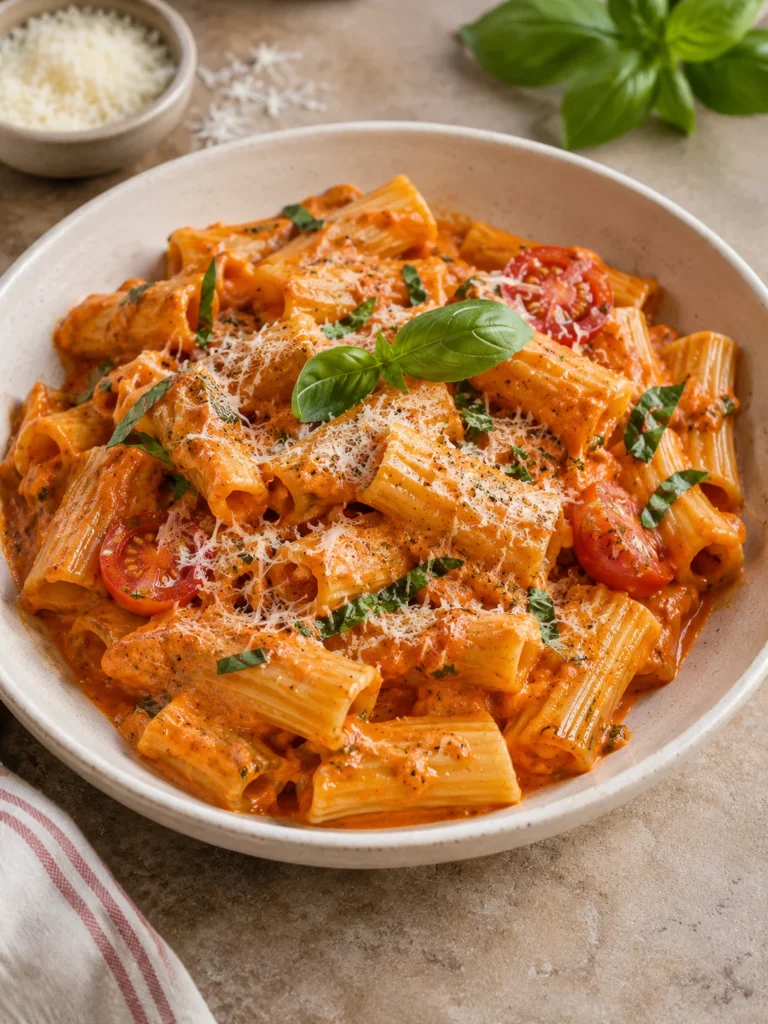
Some dinners earn their place in the weekly rotation because they are dependable, flexible, and a pleasure to eat at the end of a long day. This creamy tomato rigatoni is one of those meals. The sauce begins with onion, garlic, and tomato paste, then becomes silky with a little cream and the starchy water from the pasta pot. Basil goes in at the end, keeping the whole bowl fresh rather than heavy.
Why rigatoni works so well
The ridges on rigatoni give the sauce something to cling to, and the hollow centres catch small pockets of tomato and cream. Penne, shells, or another sturdy short pasta will work if that is what you have. Choose a shape that can be tossed through the sauce without falling apart. Very delicate pasta can become soft while you finish the dish, especially if it has already been cooked past al dente.
Check the packet timing and start tasting a piece a minute or two before the suggested time. You want the centre to have a slight firmness because the pasta will spend another minute in the sauce. Before you drain it, scoop out a mug of the cooking water. This is an easy detail to forget, so put the mug beside the pot as soon as you start cooking. The starch in the water helps the sauce coat the pasta smoothly.
Give the tomato paste a moment
Soften the onion until it is translucent and no longer sharply scented. Add the garlic briefly, then stir in the tomato paste. Letting it cook for a minute deepens its flavour and removes the raw, slightly metallic edge it can have straight from the tube. Keep the heat moderate and keep stirring: you want it to darken a little, not stick and burn. The passata goes in next to loosen everything into a sauce.
Cherry tomatoes add small bursts of sweetness and texture. They do not need to collapse completely; a few softened halves are part of the appeal. If your tomatoes are especially firm, give them another minute or two before adding the cream. Taste the sauce as it simmers. Different passatas vary in acidity, and a little extra time on low heat can make a bigger difference than adding more ingredients.
Make the sauce silky, not thick
Lower the heat before stirring in the cream. Once the pasta is in the pan, add a small splash of the reserved water and toss everything together. The sauce should look slightly looser than you think it needs to be because it thickens as the pasta sits. Add more water a spoonful or two at a time until the rigatoni is evenly coated. Avoid pouring in the whole mug at once; it is easier to loosen a sauce gradually than to thicken a watery one.
Take the pan off the heat before adding the grated cheese. This helps it melt smoothly instead of clumping against the hot base. Tear the basil just before it goes in, then fold it through gently. The leaves will soften in the residual heat while keeping their fragrance. Taste after adding the cheese because it brings its own salt. Finish with black pepper and serve while the sauce is glossy and the pasta is still hot.
Make it fit what you have
Baby spinach is an easy addition: fold in a handful just before removing the pan from the heat. Sliced mushrooms work too, but cook them before the onion so they have time to release their moisture and brown. If you enjoy heat, add a pinch of chilli flakes with the garlic. Keep the base mild when cooking for a mixed table and let people add chilli to their own bowls instead.
For a vegetarian meal, use a hard cheese that is explicitly labelled vegetarian. Traditional parmesan is often made with animal rennet, so the label matters. You can leave the cheese out if needed; the sauce will still be creamy, although it will need a little extra seasoning. This recipe has not been developed as a dairy-free sauce, so swapping the cream changes the flavour and texture and may require some adjustment.
Serving and storing
A crisp green salad and a piece of bread are plenty alongside this pasta. If you want to get ahead, make the tomato base earlier in the day, cool it, and refrigerate it. Warm it through before stirring in the cream and freshly cooked pasta. Keeping those stages separate gives a better result than making the whole dish hours ahead, because pasta continues to absorb sauce as it waits.
Refrigerate leftovers within two hours and use within three days. Reheat gently with a splash of water until steaming hot throughout, stirring occasionally so the sauce loosens evenly. The pasta will be softer the next day, but still makes a satisfying lunch. You can freeze the tomato base without the cream for up to two months; thaw in the fridge, reheat, then finish with cream, cheese, and freshly cooked pasta.
Questions from the kitchen
Can I use milk instead of cream?
Milk makes a much thinner sauce and is more likely to split in an acidic tomato base. For this version, cooking cream is the most reliable choice. If you only have a small amount left, use what you have and loosen with pasta water, accepting a slightly less creamy result.
Why is my pasta dry by the time I serve it?
Pasta keeps absorbing liquid after it leaves the pan. Loosen the sauce a little more before serving, warm the bowls if convenient, and bring everyone to the table before the final toss. Keep a spoonful of pasta water nearby for a last adjustment.