 Jump to recipe
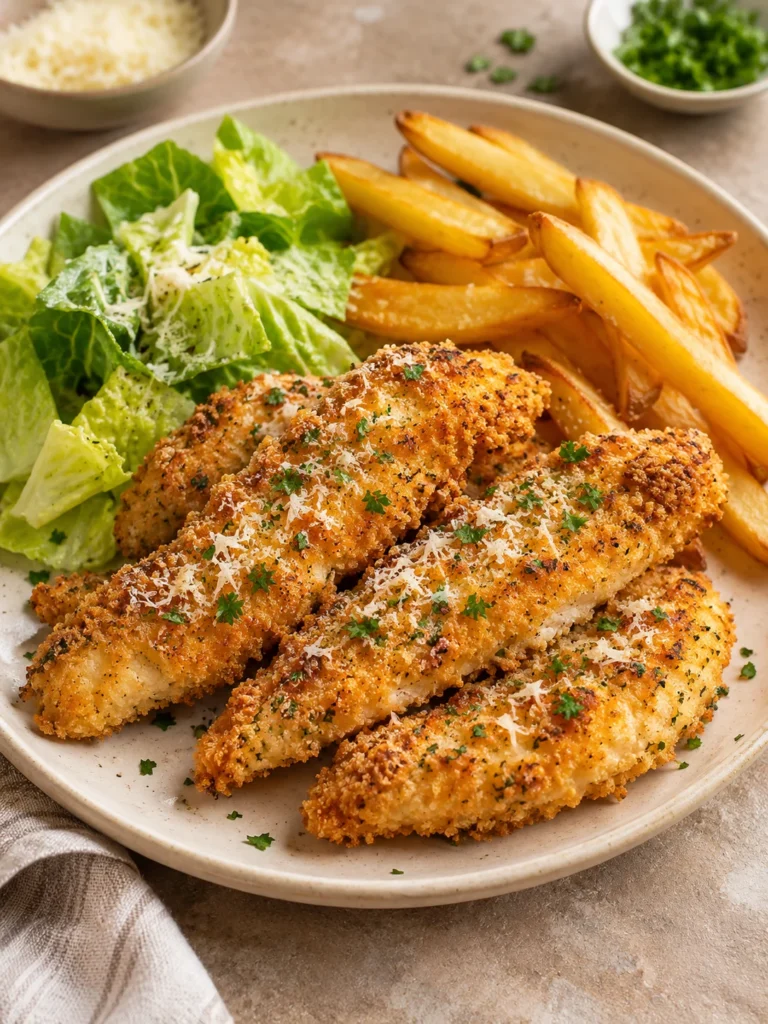
A tray of golden chicken tenders is a reliable way to make an ordinary evening feel a little more inviting. These have a crisp panko coating, a light brushing of garlic butter, and a final snowfall of parmesan. They are baked rather than deep-fried, which keeps the cooking manageable and leaves the stovetop free for another job. The result is a familiar family dinner with a little extra flavour in every bite.
Start with a hot oven and a dry surface
The most useful thing you can do is turn the oven on before you start setting out bowls. A properly preheated oven helps the coating begin to crisp immediately. Pat the chicken dry before coating it, then keep the layers thin: a dusting of flour, an even layer of egg, and a coating of crumbs pressed on gently. Too much flour can leave dry patches, while excess egg makes the crumb heavy rather than light.
Panko breadcrumbs give the coating an airy texture because the flakes are larger than ordinary dried crumbs. Rubbing a little oil through them helps them colour in the oven. They should look lightly moistened, not wet or clumped together. If you prefer, stir the oil through with a fork. Keep one hand for the dry bowls and the other for the egg bowl to make the coating process less messy.
A little space makes a big difference
Choose a large metal tray and arrange the tenders in a single layer with gaps between them. If they touch, the edges trap moisture and soften. A lightly oiled bare tray helps the underside colour; if you use baking paper for easier cleanup, expect a slightly softer bottom. Turn each piece gently halfway through, using a thin spatula so you do not scrape the coating away.
The chicken is ready when the thickest part reaches 74°C. Colour alone is not a reliable guide, especially if your pieces are different sizes. If one tenderloin is much larger than the others, give it a little extra time rather than leaving every piece in until it is done. Let the tray stand for a minute while you warm the garlic butter, then finish and serve while the crumb is at its best.
The garlic parmesan finish
Fresh garlic can burn quickly, so warm it gently in the butter over low heat. You are looking for a fragrant, pale mixture rather than browned garlic. Brush it sparingly over the hot chicken; a light coating gives you the flavour without soaking the crumb. Add finely grated parmesan straight away so it catches on the butter and softens against the warm chicken. Chopped parsley and lemon keep the finished plate bright.
If you only have regular breadcrumbs, you can use them, although the surface will be finer and less craggy. Grate parmesan from a block if possible; the very dry shelf-stable kind does not melt in quite the same way. For a slightly different finish, try a little dried oregano in the crumb. Keep chilli flakes as an optional topping at the table so the base recipe stays mild.
What to put alongside
A crisp lettuce salad with cucumber and a lemony dressing balances the buttery coating nicely. Oven fries make it a more substantial dinner, but start them first and give them their own tray. Warm wraps are another good option: slice the tenders, add shredded lettuce and tomato, then finish with plain yoghurt or a little mayonnaise. You can also serve smaller pieces as part of a casual sharing plate with vegetables and dipping sauce.
Make ahead, store, and reheat
You can crumb the raw chicken earlier in the day, cover the tray, and keep it refrigerated until cooking. Do not leave it sitting on the bench while you prepare other food. To freeze, arrange the uncooked crumbed tenders on a tray, freeze until firm, then pack into an airtight container for up to two months. Thaw overnight in the fridge and cook until the centre reaches 74°C.
Refrigerate cooked leftovers within two hours and use within three days. Reheat on a tray in a moderate oven until steaming hot throughout; the crumb usually holds up better than it does in a microwave. Keep the chicken in a single layer and avoid adding extra butter before reheating. Leftover cooked tenders are also useful in a lunch wrap, provided they have been cooled and stored safely.
Questions from the kitchen
Can I use chicken breast instead?
Yes. Slice it into even strips so the pieces cook at a similar rate. Try not to make some strips very thin and others thick. The cooking time may change, so check the thickest piece with a thermometer and take smaller pieces out as they finish.
Why is the coating pale?
Usually the oven was not fully heated, the tray was crowded, or the crumbs did not have enough oil distributed through them. Check those details before increasing the cooking time; leaving chicken in longer can dry it out without solving the underlying problem.