 Jump to recipe
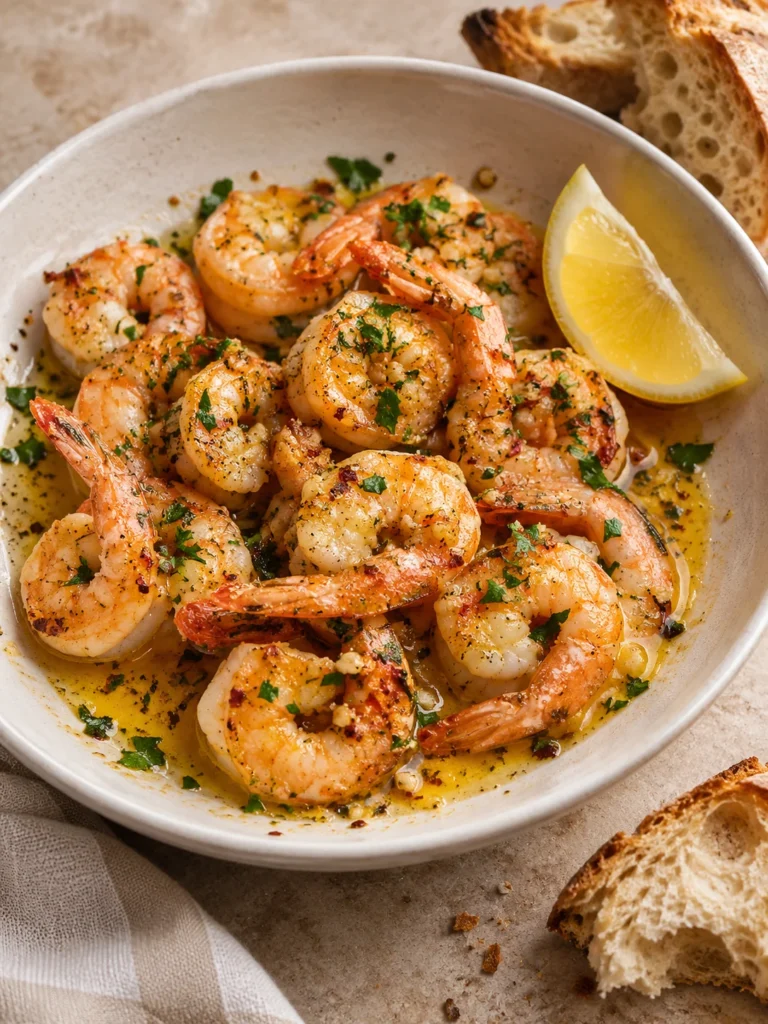
Garlic butter prawns are the sort of dinner that feels generous without being complicated. The prawns cook quickly, the sauce comes together in the same pan, and lemon keeps the butter from feeling too rich. A piece of bread is useful for catching the last spoonful, but you can just as easily serve the prawns over rice or beside a crisp salad. The main trick is having everything ready before the first prawn touches the pan.
Choose and prepare the prawns
Raw peeled prawns are the most convenient choice for a quick dinner. Medium to large ones give you a little more control because they do not overcook as quickly as tiny prawns. Tails on or off is a matter of preference: tails look attractive on a serving plate, while fully peeled prawns are easier to eat over rice. Check for the dark digestive vein along the back and remove it if it has not already been taken out.
Frozen prawns work well when thawed carefully. Put them in the fridge in a covered container overnight, then drain off the liquid and pat them thoroughly dry. Surface moisture is the enemy of a good sear: wet prawns tend to steam and release water into the butter. Drying them takes only a minute and makes the finished sauce much better. Keep raw seafood chilled until you are ready to cook, and wash your hands and preparation surfaces afterwards.
Get the pan hot, then cook in batches
Use a wide frying pan so the prawns can sit in one layer. Heat the oil and half the butter until the butter is foaming, then add the prawns with a little space between them. They should sizzle. If the pan is crowded, cook two batches rather than trying to fit everything in at once. The first side needs a short, uninterrupted cook to develop a little colour before you turn each prawn.
Prawns are ready when they are opaque and firm throughout, rather than glassy in the centre. The exact time depends on their size, so treat the minutes in the recipe as a guide. Remove them to a plate as soon as they are cooked. They will go back into the sauce briefly at the end, and leaving them in the pan while you make it can make them tight and rubbery. Check one of the largest prawns if you are unsure.
A garlic butter sauce without burnt garlic
Fresh garlic needs a much gentler heat than the prawns. Lower the heat before adding the remaining butter and chopped garlic, then keep the mixture moving. You want the garlic fragrant and pale. If it turns dark brown, it can make the whole sauce bitter. Adding the stock or water after a short stir cools the pan and lifts the browned bits from the bottom, turning them into part of the sauce.
Lemon is the final balancing ingredient. Start with the juice of half a lemon, stir, then taste. Some lemons are much sharper than others, so it is better to add more gradually than squeeze in the whole fruit automatically. Chopped parsley adds freshness, while chilli flakes are optional. Return the prawns to the pan just long enough to coat them, then bring the dinner straight to the table before the sauce cools.
Turn it into a complete dinner
For the easiest version, serve the prawns with crusty bread and a green salad. Put the bread on the table before cooking so nobody is waiting while the prawns sit. Steamed rice makes the meal more substantial and catches the buttery sauce nicely. Start it first, because the prawns will be ready quickly. A simple side of cucumber, lettuce, or steamed green beans gives the plate some contrast without competing with the garlic and lemon.
You can also toss the prawns through cooked linguine. Reserve a little pasta water and use it to loosen the sauce as you toss everything together. In that case, cook the pasta until just al dente and have it ready by the time the prawns return to the pan. Avoid adding lots of extra cheese; the appeal here is the clean combination of seafood, garlic, butter, and lemon. More parsley and black pepper are usually enough to finish.
What can be prepared ahead?
Chop the garlic and parsley, cut the lemon, and measure the butter and stock before cooking. Store prepared ingredients in the fridge if doing this earlier in the day. The prawns themselves are best cooked just before eating. The recipe moves quickly, and having the little bowls ready makes it feel calm rather than rushed. If guests are coming, assemble a salad and set the table first, then cook the prawns last.
Leftovers and reheating
Refrigerate leftovers within two hours and use within one to two days. Reheat gently until steaming hot throughout, adding a small splash of water to loosen the butter sauce. Keep the reheating brief once the prawns are hot; repeated or prolonged heating makes their texture firmer. Store rice or bread separately. This dish is at its best fresh, so cook the amount you expect to eat rather than planning a large batch for several days.
Questions from the kitchen
Can I use already cooked prawns?
You can, but skip the initial searing stage. Make the garlic butter sauce first, then add the cooked prawns only long enough to heat through. They will not develop the same browned flavour, and they need much less time in the pan. Be particularly careful not to simmer them while you prepare the sides.
Do I need wine for the sauce?
No. A little stock or water loosens the pan juices and gives you enough liquid to coat the prawns. Lemon supplies brightness, so there is no need to open a bottle or make a special shopping trip. Taste at the end and adjust the salt according to the stock you used.