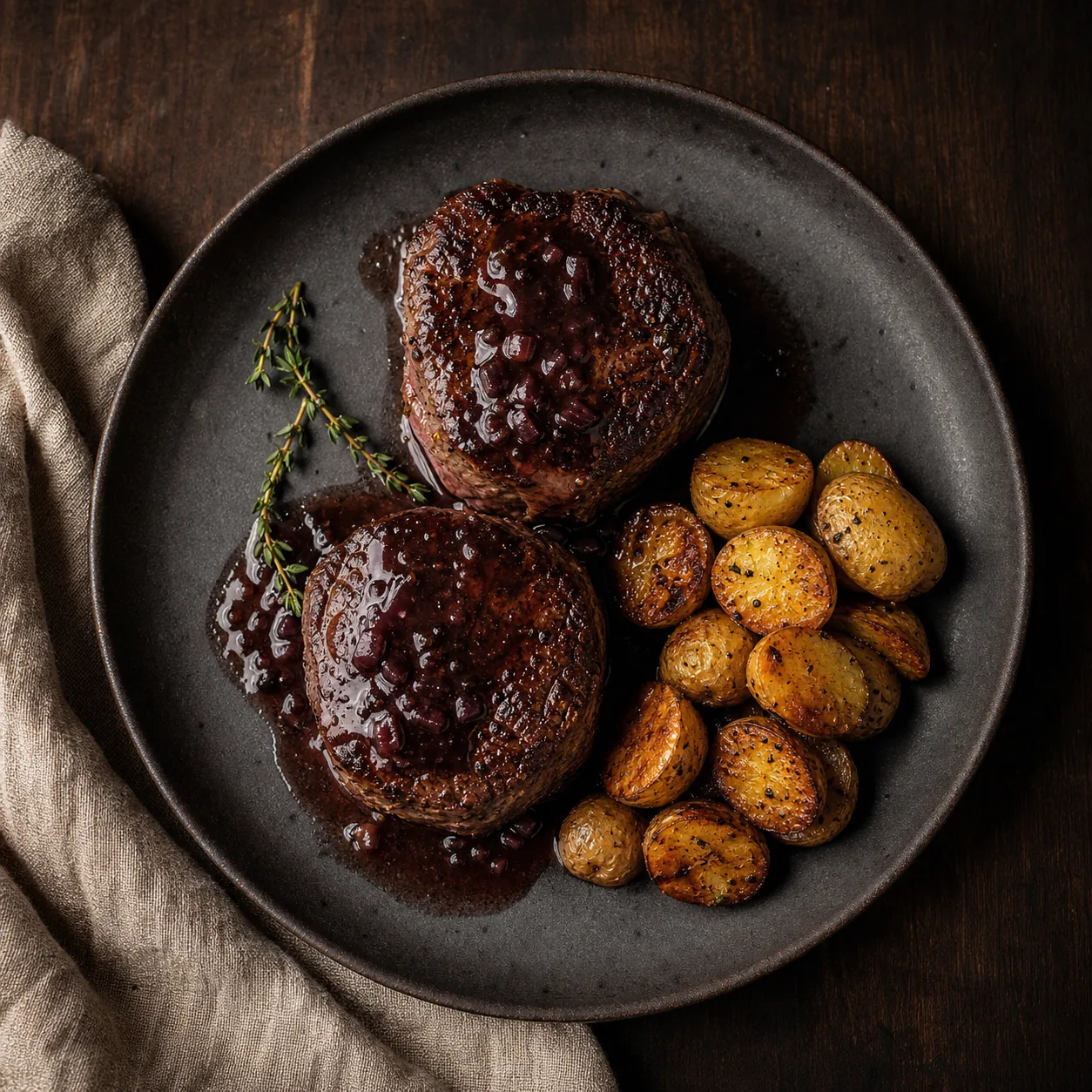
You can get a steakhouse dinner on the table in under an hour. No torch, no sous vide bath, no reservation needed. Filet mignon for two is one of the easiest fancy dinners to pull off at home. The cut does most of the work for you: it’s tender by nature, forgiving of a slightly imperfect sear, and small enough that two steaks fit in one skillet with room to spare. Add a red wine pan sauce built right in that same pan, and you’ve got a dinner that looks like you fussed over it for hours when really you were only half paying attention while the potatoes roasted.
I’ve made this exact meal more times than I can count. Birthdays, a first date I was nervous about, a random Tuesday when I just wanted to feel a little fancy. It holds up every time. Here’s how to get there.
Why you’ll love this
- Steakhouse-quality filet mignon made at home
- Rich red wine sauce uses just one pan
- Ready in under 30 minutes for two
Choosing the Right Cut and Size for Two
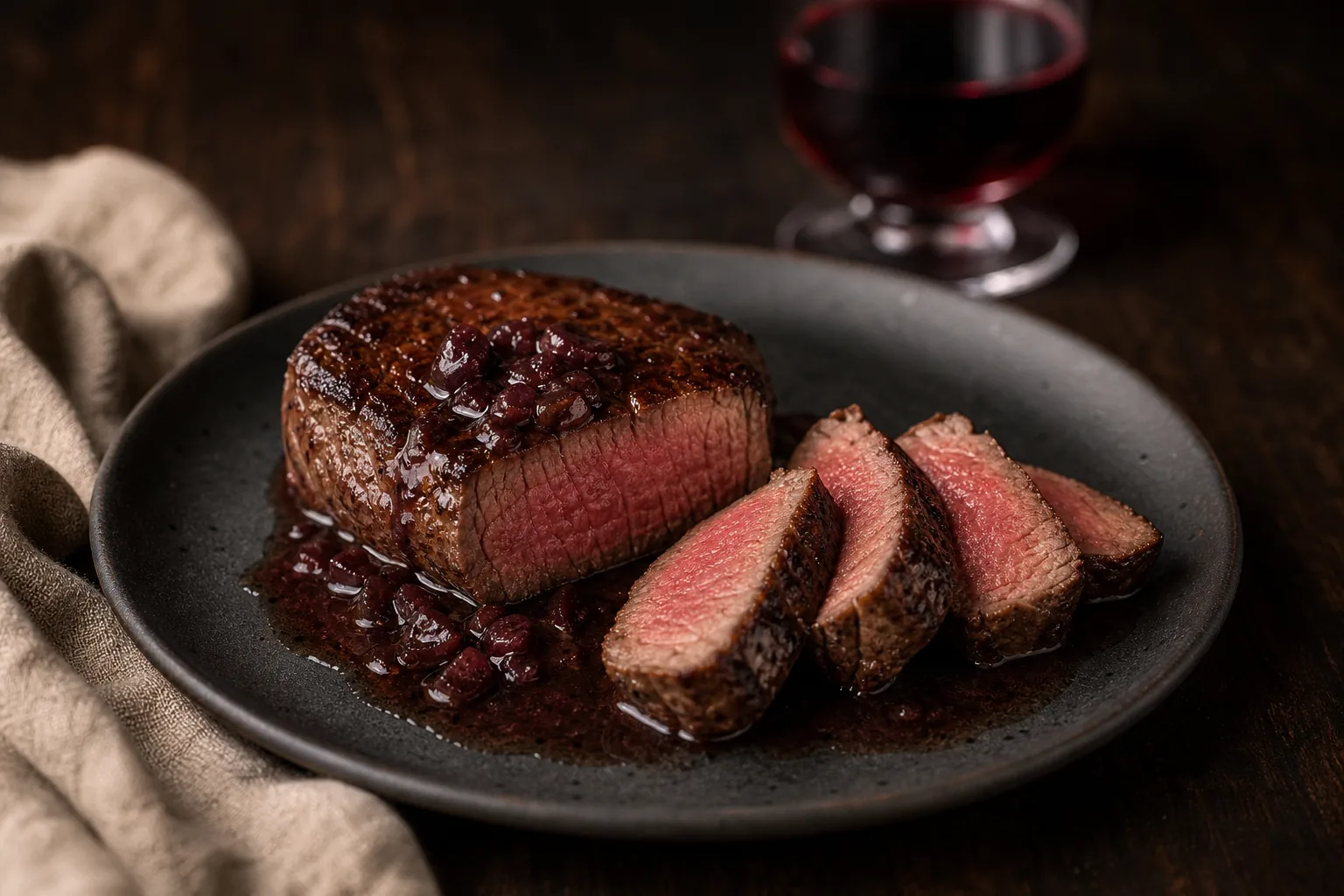
For two people, you want two filets somewhere between six and eight ounces each, cut about an inch and a half to two inches thick. Thickness matters more than weight here. A thick steak gives you the runway to build a real crust without the inside racing past medium rare. A thin one goes from raw to gray in about ninety seconds flat, and it gives you no margin for error.
Ask your butcher to cut from the center of the tenderloin rather than the tapered end. Center-cut pieces are more uniform in shape and cook more evenly. If you’re buying from a case rather than a counter, look for steaks that are roughly the same diameter all the way through, not a fat disc on one side and a thin wedge on the other. A little marbling is fine, even welcome, since filet is naturally lean and any fat you find helps with flavor. But don’t expect the kind of striping you’d see in a ribeye. That’s not what this cut is for. Filet mignon is about texture, that almost-buttery tenderness, and the red wine sauce is where you load in the savory depth the meat itself doesn’t supply.
You can get a steakhouse dinner on the table in under an hour.
Bringing the Steaks Up to Temperature Before They Hit the Pan
Pull the steaks out of the fridge at least 30 to 45 minutes before you plan to cook, longer if your kitchen runs cold. A steak straight from the refrigerator has a cold center that fights you the whole way through cooking. By the time the outside has browned properly, the inside is still lagging behind, and you end up with a thick gray band of overcooked meat around a thin pink center. Letting the steaks sit out evens that gradient before they ever touch heat, so the whole interior cooks closer to the same rate.
While they’re coming up to temperature, season generously with kosher salt and let it sit on the surface. Salting early gives it time to dissolve, pull moisture out, and get pulled back in. That’s what actually seasons the meat, rather than just sitting on top of it, which is what happens when you salt at the last second. Pat the surface dry with a paper towel right before it goes into the pan. Wet meat steams instead of sears, and steam is the enemy of a crust.
Rest the steaks
Let the filets rest on a plate while you build the sauce so the juices redistribute and stay in the meat.
Building a Real Crust Without Overcooking the Center
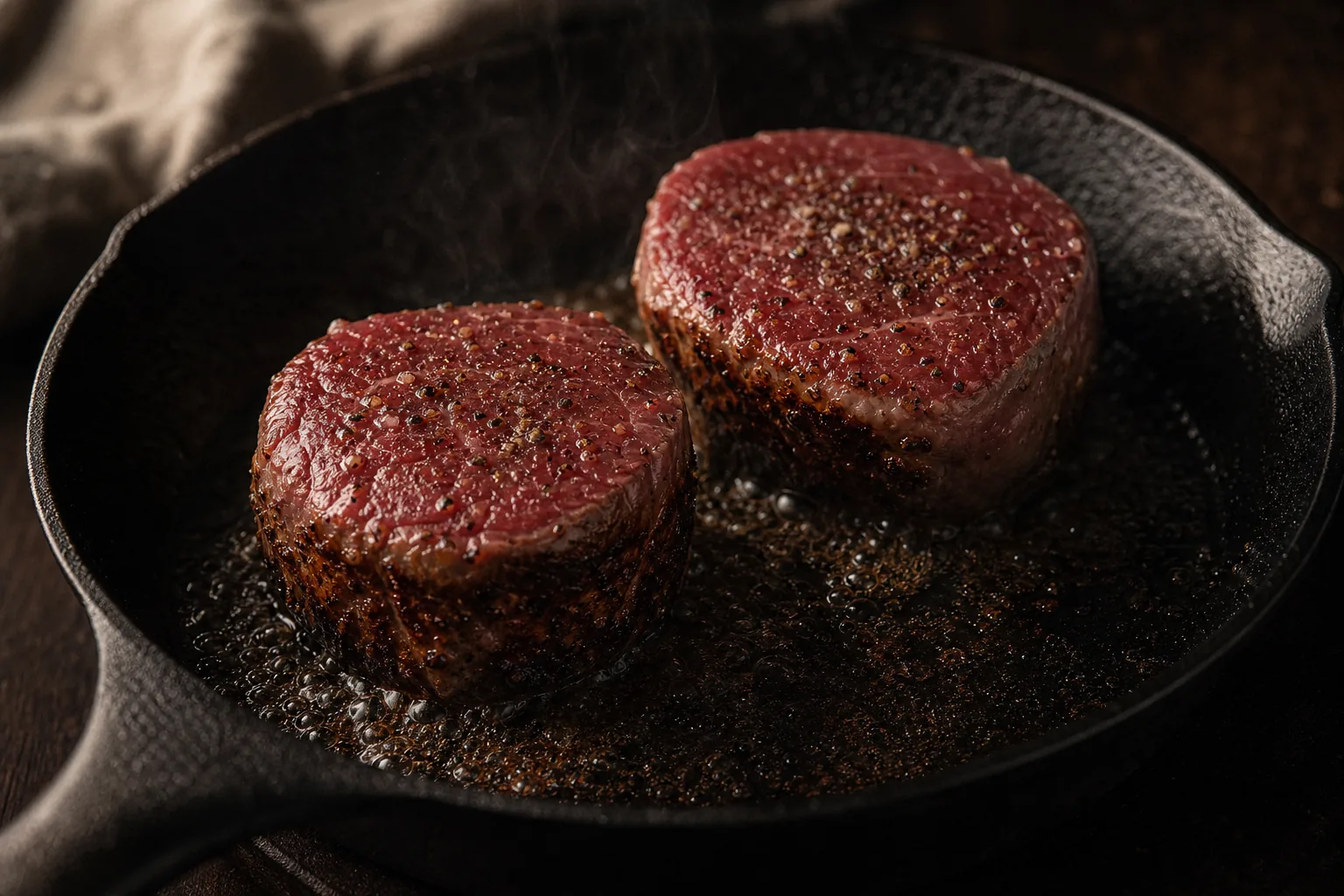
Heat matters more than almost anything else in this whole process. You want a heavy skillet, cast iron or stainless steel, heated until it’s genuinely hot, not just warm. A drop of water should skitter and evaporate almost instantly. Add a high-smoke-point oil like avocado or grapeseed, enough to coat the bottom in a thin film, and lower the steaks in away from you so you don’t splash yourself.
Resist the urge to move them. Let the first side develop a deep brown crust before you even think about flipping. That usually takes three to four minutes, depending on your stove and your pan. Once it releases easily from the surface, flip once. Add a couple tablespoons of butter along with a smashed garlic clove and a sprig of thyme or rosemary if you have it, tilt the pan, and spoon that butter over the steaks continuously for the last minute or two. This bastes the top surface while the bottom finishes. Honestly, it’s the single move that gets you the most flavor for the least effort. I’ve never once regretted the extra minute of standing there tilting a pan.
The whole cook, for a steak an inch and a half to two inches thick, generally runs six to nine minutes total for medium rare. Don’t treat that as gospel, though. Every stove and every pan is different, which is exactly why the next section exists.
Deglaze well
Scrape up every browned bit from the skillet with the wine, since that fond is what gives the sauce its deep flavor.
Reading Doneness by Touch, Timer, or Thermometer
A thermometer is the most reliable tool you have, full stop. Pull filet mignon at 125°F for rare, 130 to 135°F for medium rare, and 140°F for medium, keeping in mind the temperature will climb another five degrees or so while it rests. If you don’t own an instant-read thermometer, this is the one kitchen gadget I’d actually tell you to go buy. Guessing with beef this expensive is a rough way to learn.
If you’re working without one, the touch test is a decent backup once you’ve practiced it a few times. Press the center of the steak with your finger. Rare feels like the soft fleshy part of your palm below your thumb when your hand is relaxed. Medium rare has a little more spring to it, closer to that same spot when you touch your thumb to your middle finger. It takes some calibration, and it’s never as precise as a thermometer, but it’ll get you in the neighborhood in a pinch. A timer alone is the least trustworthy method of the three, since it doesn’t account for how thick your particular steak is or how hot your particular pan actually got. Treat timing as a rough guide, and confirm with touch or temperature before you commit to pulling the steaks.
Turning the Same Skillet into a Red Wine Pan Sauce
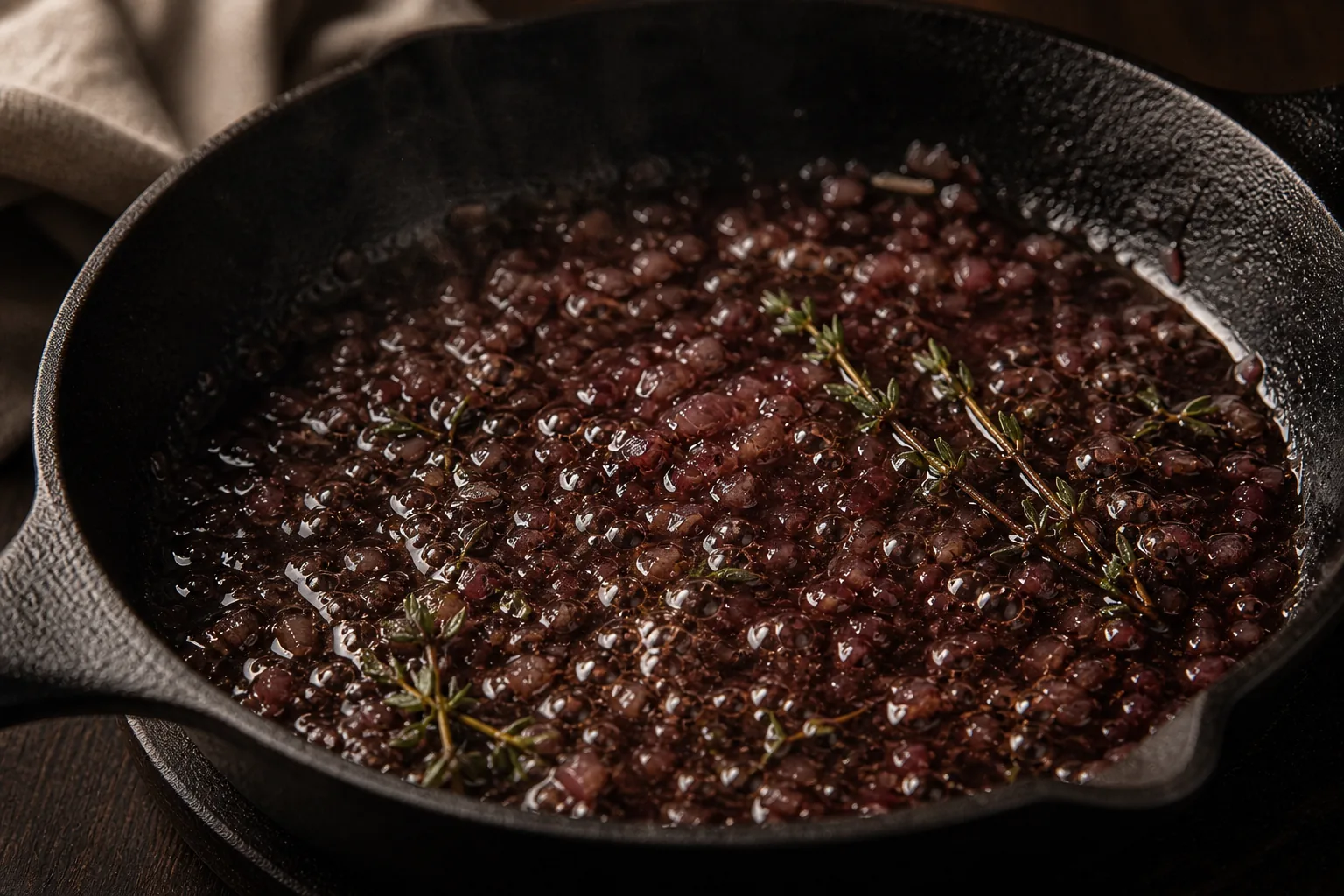
Once the steaks come out to rest, don’t you dare wash that pan. Everything stuck to the bottom, all that browned fond, is flavor you paid for, and you’re about to cash it in. Lower the heat, add a small diced shallot, and let it soften for a minute or two in the residual fat. Pour in a splash of dry vermouth to deglaze, scraping up the browned bits with a wooden spoon as it bubbles. I’ll say this every chance I get: dry vermouth does more for a pan sauce than white wine ever will. It’s more concentrated, it doesn’t go flat in the bottle the way an open white does, and you probably already have some sitting in your cabinet from the last time you made a martini.
From there, add red wine and let it reduce by about half, followed by beef stock. If you’re using the boxed or canned kind, know going in that it needs help. Straight from the container it tends to taste thin and a little flat. Give it a hand with a splash more wine, a pat of butter, black pepper, and maybe a small spoonful of tomato paste or a dash of Worcestershire to round it out. Let the whole thing reduce until it coats the back of a spoon, then swirl in a final knob of cold butter off the heat to give it that glossy sheen. Full ratios and timing are in the recipe card below.
Resting, Slicing, and Plating Like a Steakhouse
Move the steaks to a cutting board or warm plate and let them rest for at least five to seven minutes before you cut into them, tented loosely with foil. This isn’t optional. It isn’t a suggestion you can skip when you’re hungry, either. Cutting in too early lets all those juices you worked so hard to seal in run straight out onto the board instead of staying in the meat, and you’ll watch a beautifully cooked steak turn dry and gray on the plate in real time.
While it rests, warm your plates if you can. A cold plate pulls heat out of the steak faster than you’d think. Slice against the grain if you’re serving it sliced, though with filet mignon whole steaks look plenty impressive on their own. Spoon the pan sauce around the steak rather than directly over the top, so the crust you worked for stays visible and doesn’t go soggy under a puddle of sauce.
Sides and Wine That Round Out a Date Night Dinner
This dinner wants sides that don’t compete for attention. Garlic mashed potatoes, roasted asparagus, or a simple green salad with a sharp vinaigrette all work, because they let the steak and sauce stay the center of the plate. Want something a little more architectural? A stack of scalloped potatoes or a wedge of roasted cauliflower does the trick without demanding much hands-on time while your steaks are resting.
For wine, look for something with the structure to stand up to the sauce. A Cabernet Sauvignon, Malbec, or a good Côtes du Rhône all pour beautifully alongside this. You’ll find a specific pairing suggestion noted in the recipe card if you want a more exact answer. And if you ever decide to take this whole thing one step further into beef wellington territory, don’t feel bad about reaching for a box of frozen puff pastry from the grocery freezer aisle. Nobody at your table is going to know or care that you didn’t laminate the dough yourself.
Prepping Ahead So You’re Not Working the Whole Date
The beauty of this dinner is how little of it has to happen at the last minute. Salt your steaks and let them sit up to a day ahead in the fridge, uncovered. That actually helps dry the surface for a better sear later. Dice your shallot, measure your wine and stock, and have your butter cut into pats and ready to go before your guest even arrives. Potatoes can be peeled and held in cold water hours in advance, and a salad can be dressed at the very end in under a minute.
The only things that truly need to happen while someone’s watching are the sear and the sauce, and together those take maybe fifteen minutes total. Everything else is setup. Get that setup done early, pour yourself a glass of whatever you’re serving, and you’ll actually get to enjoy the company you invited over instead of standing at the stove the whole night. There’s a make-ahead timeline laid out step by step in the recipe card if you want to plan the whole evening around it.
Filet Mignon at Home with a Red Wine Pan Sauce
Ingredients
- 2 each filet mignon steaks (180-200g each, 4-5cm thick, patted dry, at room temperature)
- 1.5 tsp kosher salt (divided, for seasoning steaks)
- 1 tsp black pepper, coarsely ground (divided, for seasoning steaks)
- 1 tbsp neutral oil (high smoke point, e.g. avocado or grapeseed)
- 4 tbsp unsalted butter (divided: 1 tbsp for basting steaks, 3 tbsp for sauce (1 tbsp reserved to finish))
- 2 sprigs fresh thyme (1 for basting, 1 for sauce)
- 2 cloves garlic (smashed, 1 for basting, 1 minced for sauce)
- 1 small shallot (finely minced, about 3 tbsp)
- 120 ml dry red wine (such as Cabernet Sauvignon or Merlot)
- 180 ml beef stock (low-sodium)
- 1 tsp balsamic vinegar (optional, for brightness)
- 0.25 tsp kosher salt (to season sauce, adjust to taste)
- 1 pinch black pepper (to season sauce)
Instructions
- Season steaks all over with 1 tsp salt and 3/4 tsp pepper; let sit at room temperature 30-45 minutes before cooking.
- Heat a heavy skillet (cast iron or stainless) over high heat until just smoking, about 2-3 minutes. Add neutral oil.
- Sear steaks without moving them, 2.5-3 minutes per side, until a deep brown crust forms.
- Reduce heat to medium. Add 1 tbsp butter, 1 smashed garlic clove, and 1 thyme sprig; tilt pan and baste steaks with the foaming butter for 1-2 minutes, flipping once, until internal temperature reads 5-6C below your target doneness (carryover cooking during rest).
- Transfer steaks to a plate and rest loosely tented with foil for 8-10 minutes; internal temperature will rise about 4-6C while resting. Do not wipe out the skillet.
- Reduce heat to medium-low. Discard the spent garlic and thyme from the pan. Add minced shallot and cook, stirring, 1-2 minutes until softened.
- Add minced garlic and remaining thyme sprig; cook 30 seconds until fragrant.
- Pour in red wine, scraping up any browned bits. Simmer 3-4 minutes until reduced by about half.
- Add beef stock and balsamic vinegar; simmer 5-6 minutes until reduced to a light syrup consistency, about 120ml total volume.
- Remove pan from heat, discard thyme sprig, and swirl in remaining 1 tbsp butter until glossy. Season with 1/4 tsp salt and a pinch of pepper.
- Slice steaks against the grain if desired, plate, and spoon warm red wine sauce over the top. Serve immediately.
Wine pairing
| Tier | Style | Why |
|---|---|---|
| everyday (under $20) | Argentine Malbec | soft tannins and dark-fruit richness echo the pan sauce without competing |
| midweek treat ($20-45) | Californian Cabernet Sauvignon | classic steakhouse match — firm tannins cut the richness of seared filet and mirror the reduction's depth |
| special occasion ($45+) | Bordeaux (Left Bank Cabernet blend) | structured tannins and savory complexity elevate the beef while harmonizing with the wine-based sauce |
Doneness
| rare | 49°C / 120°F |
| medium_rare | 54°C / 129°F |
| medium | 60°C / 140°F |
| medium_well | 65°C / 149°F |
| well_done | 71°C / 160°F |
USDA recommends a safe minimum of 63C (145F) with a 3-minute rest.
Equipment
- heavy skillet (cast iron or stainless steel, 25-30cm)
- instant-read meat thermometer
- tongs
- small saucepan-worthy spoon for basting
- cutting board
- aluminum foil for resting
Frequently asked
What temperature should filet mignon be cooked to?
Can I use a different wine for the pan sauce?
Do I need a cast iron skillet?
How do I keep the filets from getting tough?
As an Amazon Associate I earn from qualifying purchases.
Leave a Reply